Research

What We Study

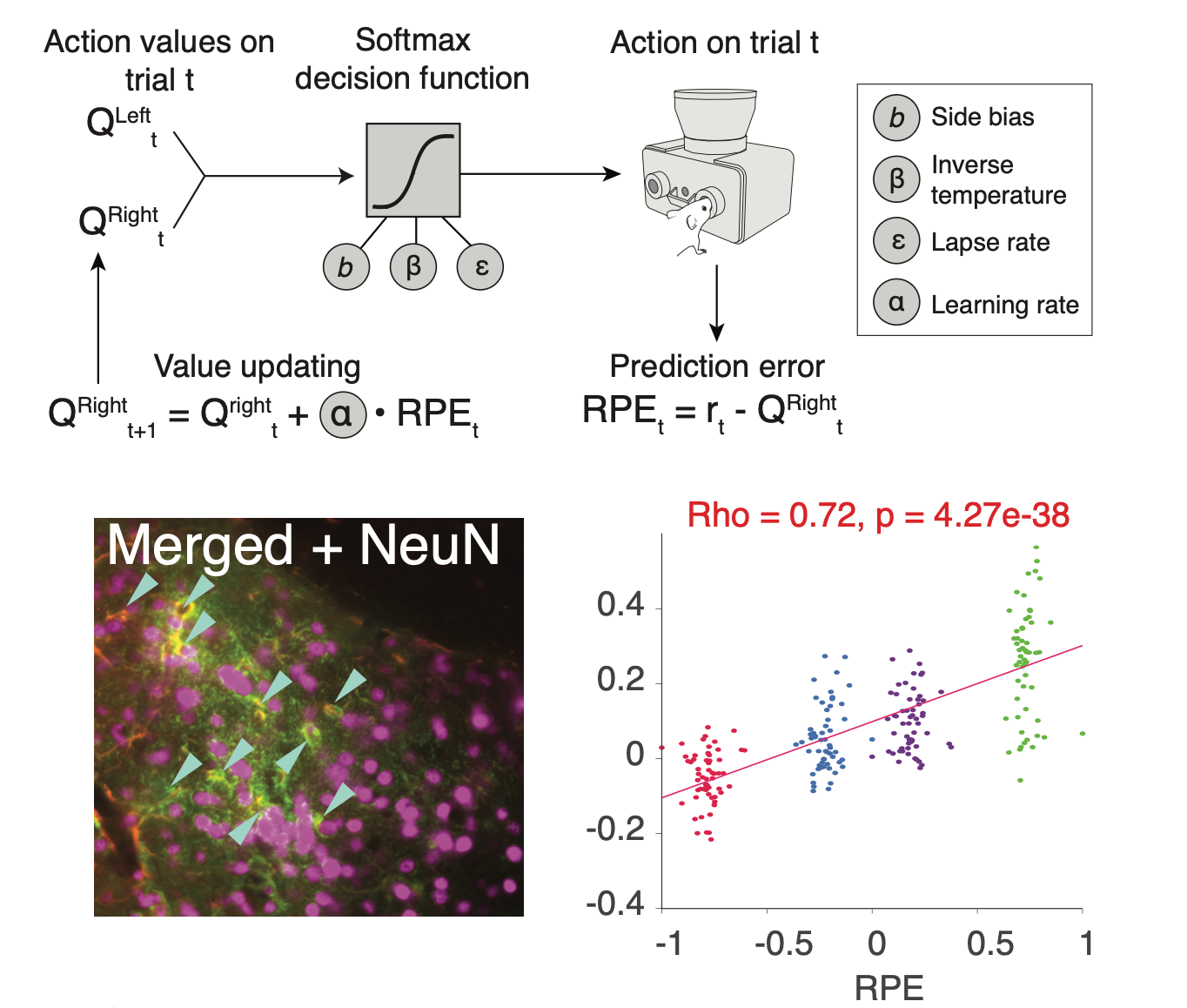
Reinforcement learning model, astrocyte histology, and reward prediction error correlation
01

Mechanisms of Cognition and Its Disorders Under Uncertainty

How does the brain combine reward, uncertainty, information, and time into a single risk-sensitive decision and action, and how does it learn from the outcome? How do we generate actions and adapt to errors coming from either ourselves or explicitly from the noisy and/or volatile world?

Read more

We record from and perturb circuits in animals and construct detailed models of behavior to identify the computations that drive it. Through computational psychiatry, we apply the same models to human behavior to ask where these computations go wrong in disorders of mood and cognition such as OCD.

This work extends beyond neurons, including the role of astrocytes in learning from reward prediction errors.
Decision MakingUncertaintyComputational PsychiatryAstrocytes
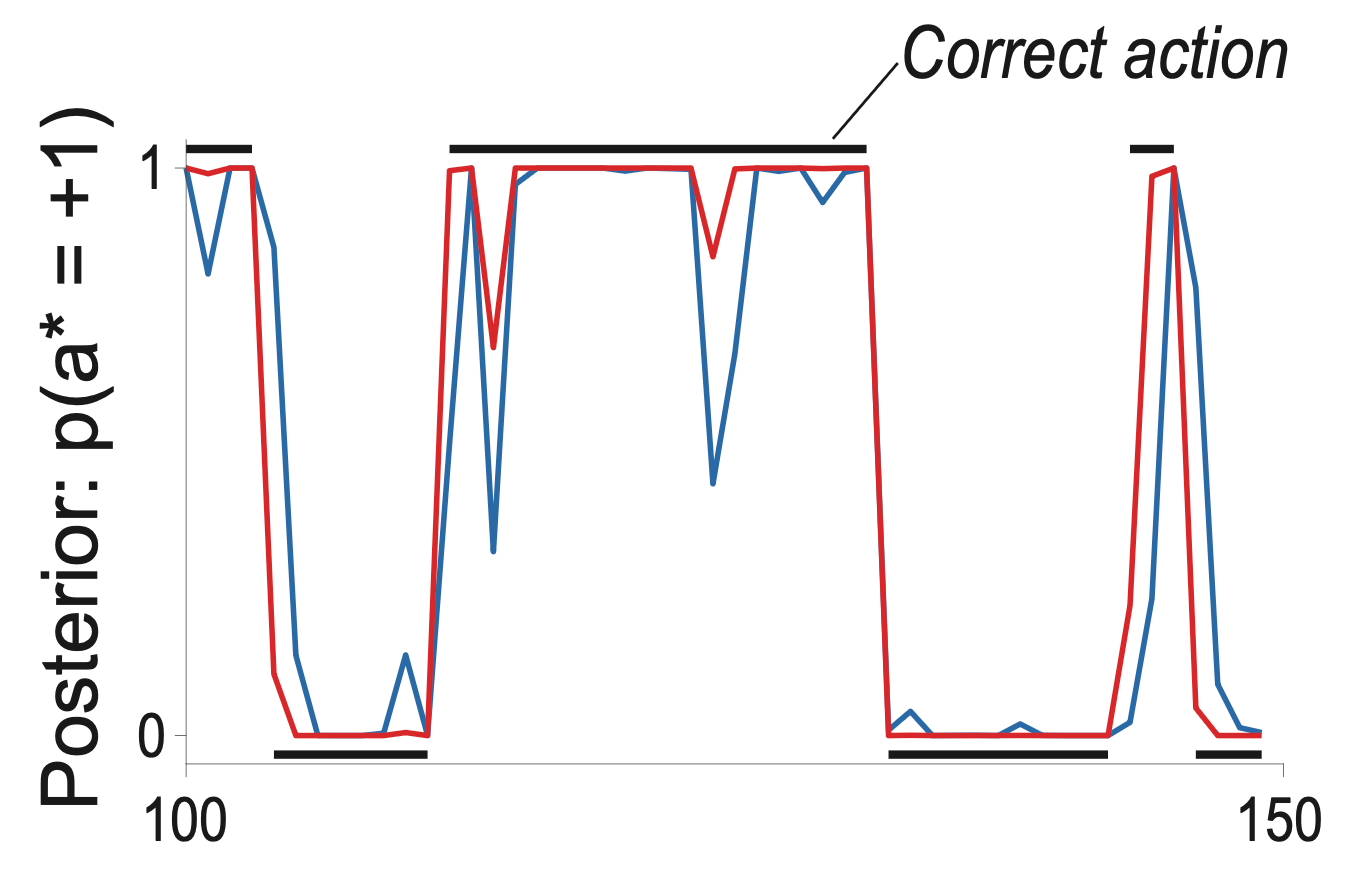
Posterior probability of the correct action over trials in a curiosity and decision-making task
02

Biological and Machine Curiosity

Why do humans and animals seek information even when it brings no immediate reward?

Read more

We study the cortical, basal ganglia, and thalamic circuits that anticipate and value the resolution of uncertainty, measure information seeking in large human samples (including psychiatric populations), and build curious artificial agents, to uncover what makes us us.

CuriosityInformation SeekingArtificial Agents
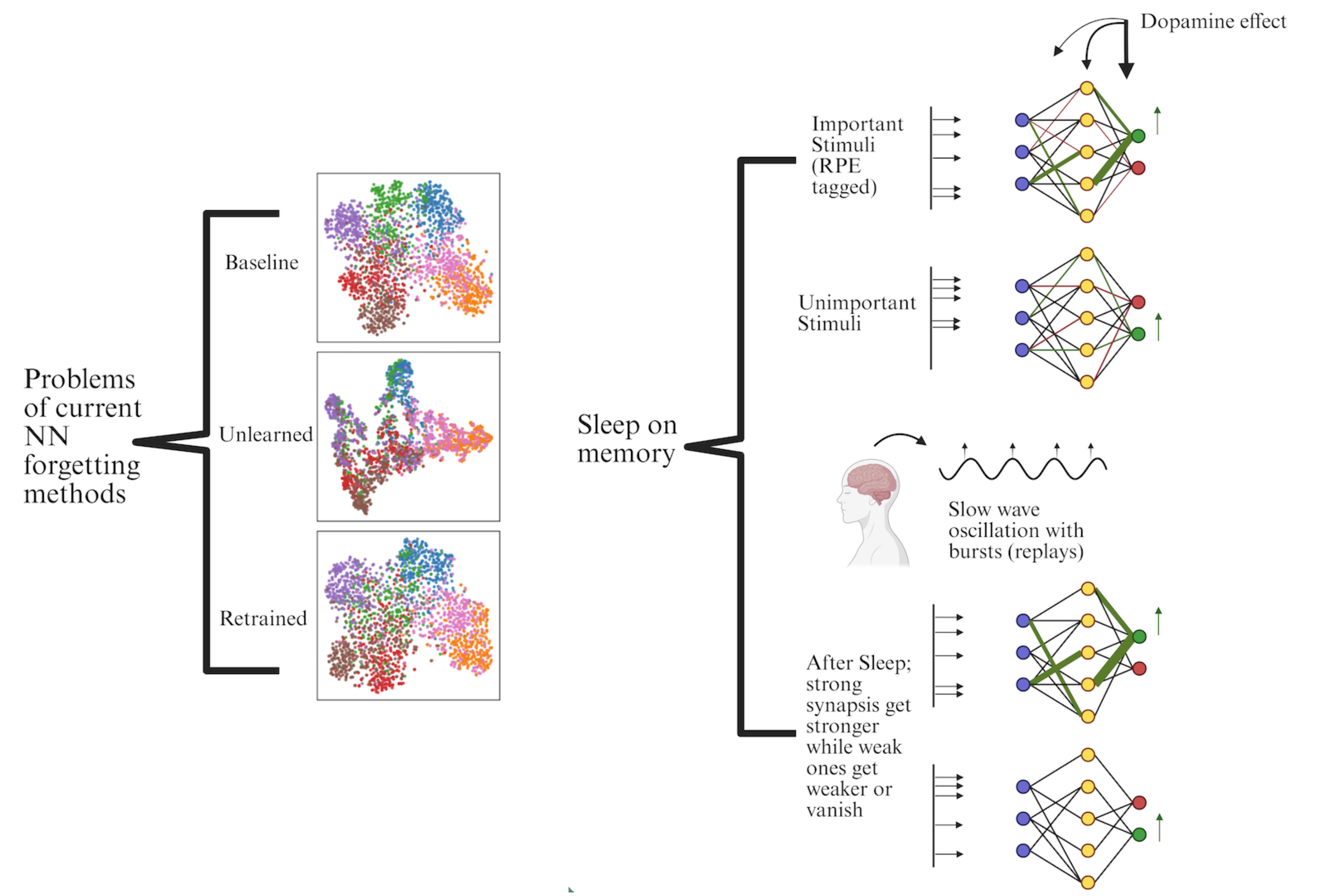
Limitations of current neural-network unlearning and a sleep-inspired memory reshaping model
03

Knowledge Acquisition and Unlearning in Biological and Artificial Networks

Brains learn continuously and forget selectively, while artificial networks still struggle with continual learning and adaptive unlearning.

Read more

We study how neuromodulators participate in learning in vivo, and we are starting to examine how sleep then reshapes memories. We use these principles to build brain-inspired networks that learn and forget flexibly and adaptively.

Continual LearningUnlearningNeuromodulatorsSleep
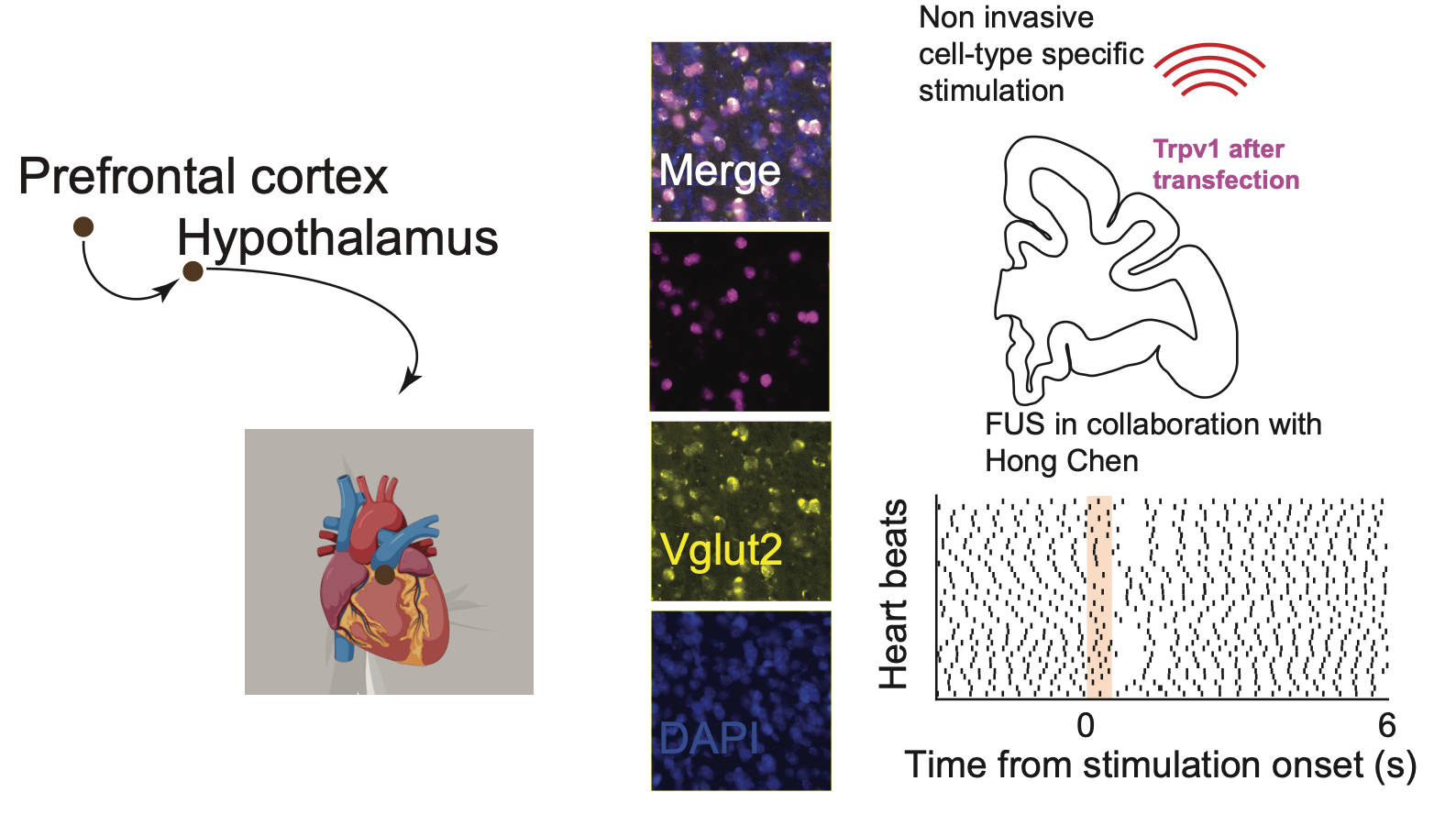
Prefrontal–hypothalamic control of the heart and noninvasive cell-type-specific ultrasound stimulation
04

Brain-Body Interactions in Mood

Emotion engages both the brain and the body.

Read more

We study how prefrontal and hypothalamic circuits control the heart and, in collaboration with Dr. Hong Chen at Washington University in St. Louis, developed noninvasive, cell-type-specific ultrasound stimulation for nonhuman primates, as a first step toward targeted treatments for disrupted brain-body interactions in mood disorders.

We are continuing this work and building collaborations with the Johns Hopkins Department of Neurosurgery.

Brain-Body InteractionsMood DisordersUltrasound Stimulation

Funding

Our work has been generously supported by private foundations, including the Wellcome Trust and the McKnight Foundation.

We are also funded by the NIH and DOD, which means by taxpayers, to whom we owe hard work and real scientific progress.

In addition, we are part of the Conte Center for the Circuits of OCD.

Wellcome Trust McKnight Foundation National Institutes of Health U.S. Department of Defense